Valley of the
Commons

A 4-week immersive pop-up community in the valley — where regenerative living, local economics, and deep human connection are practiced, not just preached.

SCHEDULE

Four immersive modules

Each module builds on the last, taking you from theory to practice across the four pillars of a thriving commons.

FOUNDATIONS

MODULE 01

Return of the Commons

Aug 24 – Aug 30

To set the scene, we open with a five-day intensive led by Michel Bauwens and Adam Arvidsson — two of the most insightful and engaging contemporary thinkers on the commons. Expect a wide-ranging journey through history, economics, and social theory, peppered with anecdotes, examples, and hard-won insight. The week moves from grand narrative to grounded orientation: where commoning comes from, why it is resurfacing now, and what it asks of the people who practice it. Through lectures, guided discussion, and long conversations over shared meals, we build a common vocabulary for the weeks ahead — peer production, generative ownership, the partner state, post-capitalist transition. By Saturday you won't just have heard the theory; you'll have argued with it, tested it against your own work, and begun to read the valley itself as a live experiment in the ideas. This is the conceptual ground every later module builds on.

ECONOMICS

MODULE 02

Local Production & Value Accounting

Aug 31 – Sep 6

In the second week we shift from macro-narrative to mechanism: how a village economy could actually function day to day. Through theory sessions and hands-on workshops, participants explore how a global knowledge commons and local production capacity can together sustain a resilient local economy. We dig into cosmo-local manufacturing — design global, produce local — and prototype it in the on-site fablab and atelier. Participants map real material flows, experiment with open-source machines, and confront the hard question every commons economy must answer: how do you account for value that markets ignore? We work through contributory accounting, mutual credit, and complementary currencies not as abstractions but as tools you operate by hand. Expect to leave with a working intuition for designing an economic layer that rewards care, maintenance, and contribution rather than extraction — and a first draft of a ledger for the valley's own emerging economy.

DESIGN & LIVING

MODULE 03

Future Living

Sep 7 – Sep 13

Week three turns toward how we might actually live together — architecturally, legally, ecologically, and socially. We explore cooperative housing concepts, survey the valley's unused buildings, and read the land itself as a site for long-term habitation. Working alongside architects and land-as-commons practitioners, we walk the Höllental site and inventory what is already here: dormant villas, factory shells, water, forest, slope, and light. We sketch retrofit and co-housing scenarios, examine commons-compatible legal wrappers for holding land in trust, and weigh the ecological limits and potentials of the place. The week pairs design-studio energy with fieldwork boots — measuring, drawing, and arguing about thresholds, shared space, and privacy. The outcome is a set of concrete, sited proposals for permanent living in the valley, grounded enough to take to owners, planners, and future residents.

GOVERNANCE

MODULE 04

Governance & Funding Models

Sep 14 – Sep 20

The final week brings everything into the domain of stewardship: how we organize, decide, invest, and protect what we build together. We explore participatory governance frameworks, cooperative legal structures, and long-term investment models. Building on the economy of week two and the design proposals of week three, we move from sketches to a governable structure. We compare sociocratic and assembly-based decision-making, draft cooperative and foundation forms suited to multi-stakeholder stewardship, and design mechanisms for holding shared assets in trust across generations. We also confront funding head-on: blended capital, patient and recoverable finance, community ownership, and the trade-offs each carries for autonomy. The week — and the four weeks — closes by assembling the threads into one coherent proposal for the Valley of the Commons: a place, an economy, a way of living, and a way of deciding, ready to outlast the pop-up that seeded it.

The Return of the Commons

Across Europe and beyond, digital workers, post-corporate professionals, and remote-friendly entrepreneurs seek grounded, cooperative ways of living, beyond the isolation of the metropolis and the fragility of atomized nomadism.

This turn toward intentional communities is a structural process enabled by remote work, motivated by a longing for connection and nature, and driven by the need to hedge against rising volatility from climate shocks, fragile supply chains, precarious employment, and social or environmental degradation.

As corporate capitalism fails harder and harder, the urgent need for socio-technical systems, resilient enough to endure the coming decades, becomes apparent. The concepts are here, but we need real places, shared practices, and long-term structures to anchor them in daily life. This is why we build the Valley of the Commons.

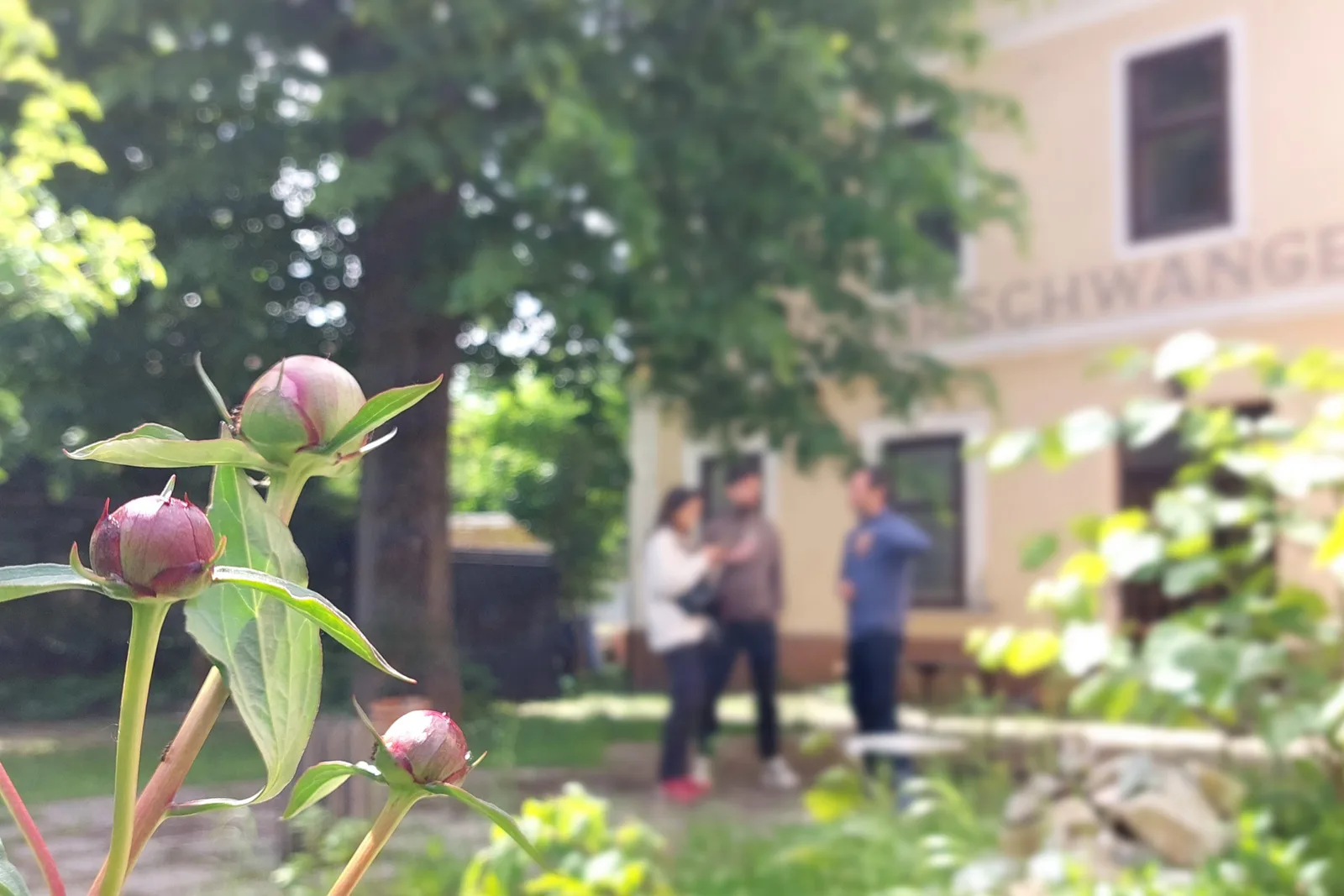
Commons Hub front

Venue: Commons Hub

As an experimental playground for regenerative systems design, the commons hub explores the liberatory potential of emerging technologies and social techniques that facilitate horizontal communities.

Drawing on years of experience in managing creative chaos, it provides the stability and freedom to let emerging communities bloom. Its facilities – versatile event spaces, a fablab, atelier, and outdoor gym – are complemented by self-organizing practices, gently guiding creative energy into productive flows.

In short, this village does not start from zero. It sprouts from a living, breathing center of the commons movement that offers an economic engine, a platform for entrepreneurship, and a beacon for metamodern thought and praxis.

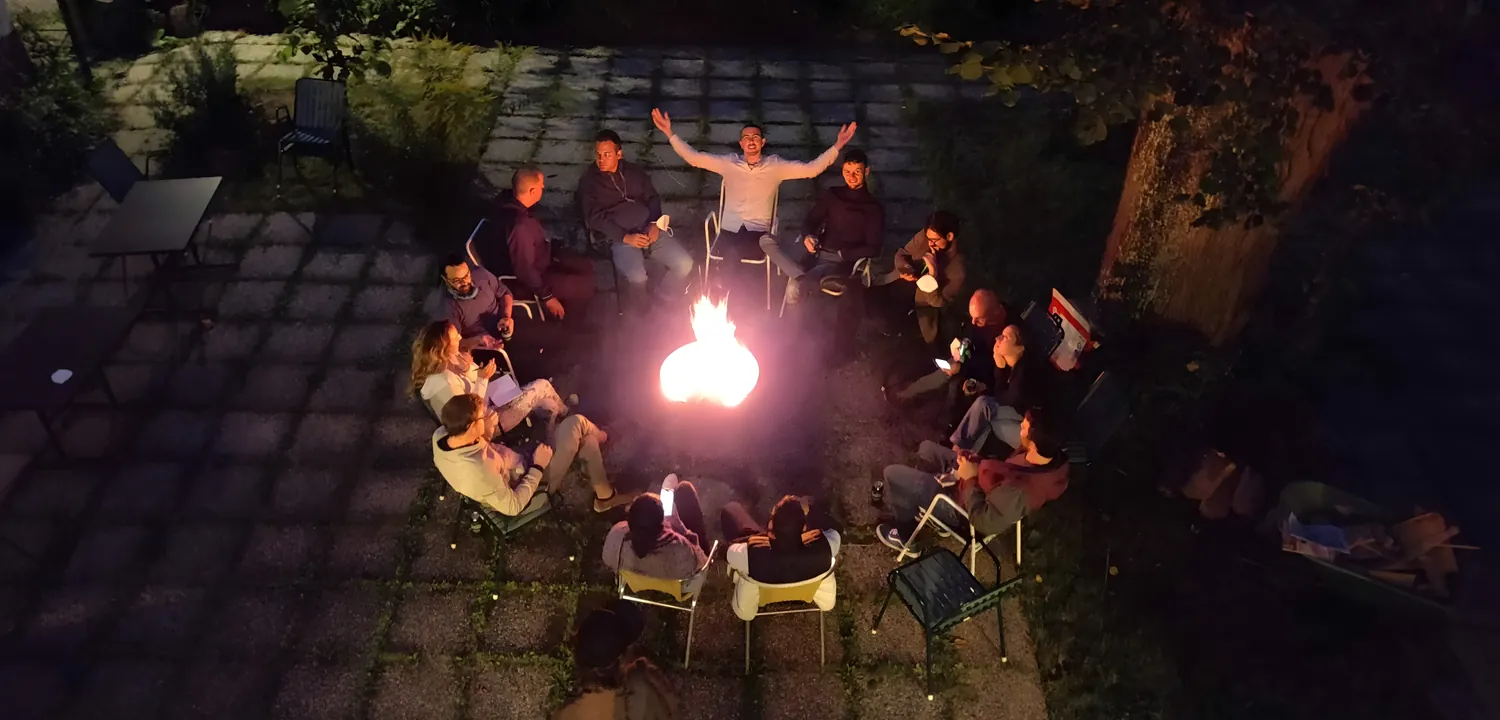
Campfire at Commons Hub

Location: Höllental

Just an hour south of Vienna, Höllental closes the gentle Danube basin with a dramatic landscape of high peaks, steep cliffs, and cold rushing streams framed by dense forests. It feels remote, almost untouched, yet remains remarkably accessible: nearly 10 million people live within a three-hour drive, and Vienna's international airport is under two hours away by rail.

Formerly a famed imperial summer retreat and wood-industry hub, the valley spent the last century dormant, its villages slowly decaying.

Recent signs of reversal point to a shift toward outdoor tourism, as hotels renovate and factories close for good. And yet, real estate remains affordable, with many houses and villas still awaiting new purpose.

Adding to its beauty and accessibility, the opportunities on the ground make this valley ideal for building for permanence.

Explore the Valley →

Collaborators

Adam Arvidsson

Adam Arvidsson

read more ⌄

Adam Arvidsson is Professor of Sociology of Cultural and Communicative Processes at the Università Federico II di Napoli. His research explores emerging forms of cooperation enabled by digital media and their economic and political potential, with a particular focus on the evolving relationship between capitalism and the commons.

Charlie Fisher

Charlie Fisher

read more ⌄

Charlie works on the practical demonstrations for new affordable housing and commons-based landholding approaches. As a researcher, founder, and project advisor, he ran an architecture practice for a decade, ran the Civic Tech studio at Dark Matter Labs, was a key advisor on large scale new housing developments in England, and was a co-founder of Oasa, a Swiss token-issuer for networked land projects.

Clara Gromaches

Clara Gromaches

read more ⌄

Clara Gromaches is an architect working on housing and land as commons. Her work combines fieldwork and emerging digital technologies to create experimental financial and governance mechanisms that protect and accelerate community-led models of collective ownership and stewardship through Komma.

Daniel Figueiredo

Daniel Figueiredo

read more ⌄

Daniel manages hospitality at the Commons Hub with a unique blend of practicality, intelligence, and charm. His exceptional problem-solving skills and calm approach to tackling tough situations ground our community on a daily basis, and his positive energy lights our way as we transform our valley.

Emil Fritsch

Emil Fritsch

read more ⌄

Emil, Co-Founder of the Commons Hub, comes from a civil engineering background and has worked in computer vision, started a green tech company, and built validator nodes for the hub. He entered IT during the 2017 neural network chess engine revolution. In 2020, he saw Hirschwangerhof's potential and organized its first event—a 3-week hackathon and retreat—paving the way for the Commons Hub.

Felix Fritsch

Felix Fritsch

read more ⌄

Felix Fritsch, Co-Founder of the Commons Hub and Crypto Commons Association, combines expertise in political and economic theory with a passion for community organizing. Completed his PhD on The Emergence of the Crypto Commons.

Jeff Emmett

Jeff Emmett

read more ⌄

Jeff is an engineer of the commons, spreading hyphae of new tooling underground in order to compost extractive systems into cooperative infrastructure. Currently tending the digital mycelium beneath the Valley.

Koss

Koss

read more ⌄

Koss is the Lead Gardener at Invisible Garden and runs Ecosystem & Community Growth at Swarm. With a mixed background across the arts, grassroots activism, policy/gov relations, Koss is generally curious about our expansion as a multi-planetary civilization and a long time supporter of the Commons Hub.

Lorenzo Patuzzo

Lorenzo Patuzzo

read more ⌄

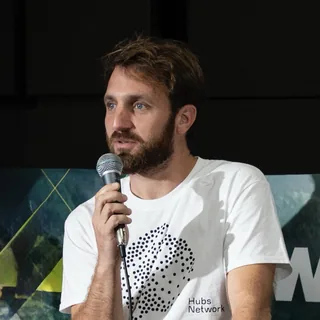
Lorenzo Patuzzo is a Creative Technologist and a Social Entrepreneur. He is part of AKASHA Foundation and Founder of AKASHA Hub, Hubs Network and Green City Lab, promoting collaboration, decentralization and open source philosophy, and facilitating local collaborative projects for social good and for the environment. He has been working in different sectors varying from industrial design, cinema, architecture and distributed global digital infrastructures since 2013. He is now focusing on a network of collaborative R+D places for society improvement as a path towards a coherent and self-managed society.

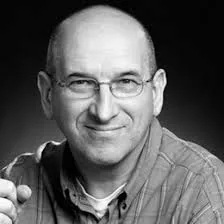
Michel Bauwens

Michel Bauwens

read more ⌄

Michel Bauwens, founder of p2pfoundation & FairCoop, is a Belgian political theorist, writer, and conference speaker on the subjects of technology, culture and business innovation.

Nena Jain

Nena Jain

read more ⌄

Nena brings experience working at the Regen Foundation and ongoing stewardship of the Ecological Institutions research body with River Computer. Her work focuses on systems thinking, operational protocols, and building coherence across distributed, multi-stakeholder environments.

Rashmi Abbigeri

Rashmi Abbigeri

read more ⌄

Rashmi Abbigeri is a research engineer at MetaGov working on grant analytics through Open Grants. Her work emphasizes the development of AI-ready datasets, a critical factor for the sustainable scaling of beneficial AI systems across different sectors.

Stefan Schütz

Stefan Schütz

read more ⌄

Stefan is a collaborative economy practitioner and former chairman of Chiemgauer Regiogeld, Germany's oldest regional currency project. After 20 years in the project, he is now building a fab lab to explore local production in practice.

Una Wang

Una Wang

read more ⌄

Una Wang researches machine agency, decentralized governance, and cyber-physical systems in the built environment as a Civil Engineering PhD candidate at ETH Zurich. Her work bridges blockchain technology, autonomous systems, and regenerative systems, exploring how these technologies can transform ownership and governance in physical infrastructure. She led research projects no1s1, co-founded DaoSuisse and Zuitzerland, and advises startups on blockchain integration and decentralized infrastructure.

Veronica

Veronica

read more ⌄

Veronica keeps organizing pop-up cities despite continuously declaring she is not an event organizer, and previously organized ZuVillage Georgia in 2024 and Zuitzerland in 2025. Her background and passions span education technology, artificial intelligence, decentralized technologies, individual and collective optimization, and truth seeking.
Community Partners

Hubs Network Invisible Garden Understories P2P Foundation Crypto Commons Association Collaborative Finance Akasha Hub dOrg FarmLab MycoStack

Explore the Valley

Click to interact

Join Us in the Valley

Four weeks of commons-building in the Austrian Alps. Live, learn, and build together with practitioners, researchers, and community builders shaping life beyond extractive systems.

Aug 24 – Sep 20, 2026 Höllental, Austrian Alps from €120 / week
Reserve Your Spot

Not ready to register? Stay in the loop.

You'll be added to our mailing list to stay updated.